Can 50 Iridescents Defeat Warzone Streamers in a Ranked Rebirth Island Format?
Need articles like this for your video? They help promote it on YouTube and Google — order them in the Telegram bot @sat_sit_bot. It writes articles around your video, embeds the video and publishes them on popular niche websites (no ads). Free trial — 50 articles.
· based on the channel Swagg
The short answer is that Iridescent-ranked players can absolutely beat Warzone streamers in a closed custom lobby, but the finale of Swagg's Iri Invitational shows it is rarely a clean sweep. Across six games of ranked solo customs on Rebirth Island, roughly 50 Iridescent grinders and a roster of well-known streamers traded wins, with the $2,000 prize pool spread over a full series rather than a single match. You can follow Swagg's live ranked runs and future invitationals on his Twitch channel, where the format and sign-up details usually surface first.
The event is built on a simple premise: take players who live in Iridescent lobbies and drop them against creators whose names carry weight in the Warzone community. The result is less a proof of who is "better" and more a stress test of ranked fundamentals against content-level aggression.
What the Iri Invitational finale actually is
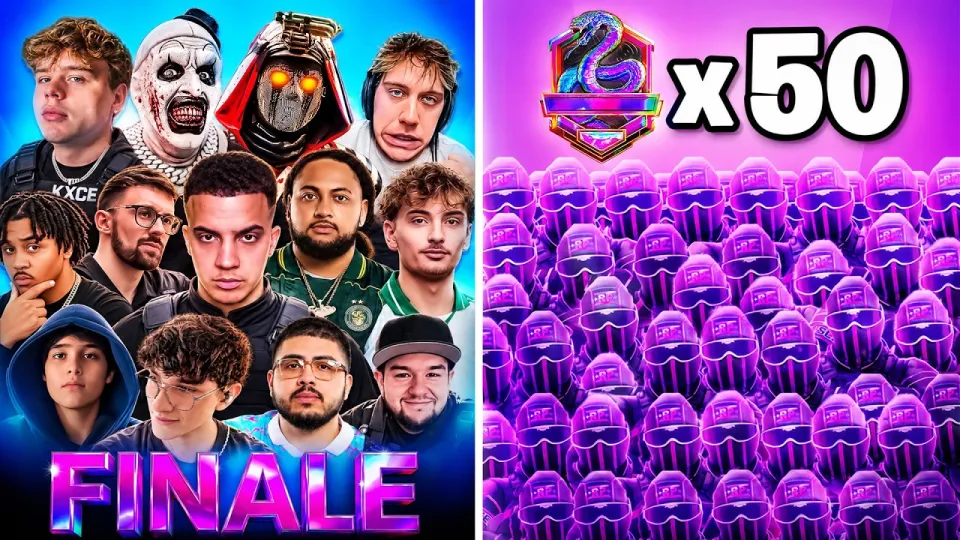
The Iri Invitational is a community-run Warzone tournament series in which Iridescent-ranked players are matched against recognizable streamers in custom lobbies. The finale, published by Swagg, compresses all POVs from six games of ranked solo Rebirth Island customs into one long-form video, with $2,000 on the line for the first edition of the series.
The lineup reads like a cross-section of the Warzone ecosystem. On the streamer side you get names such as Swagg, Shifty, Hisoka, JoeWo, Metaphor, KxceTwin, Diablo, Hero, Dongy, Kenner, Ketchup and Repullze, alongside a much larger field of Iridescent qualifiers. Because it is a solo custom format on Rebirth Island, there are no teammates to hide behind and no respawn cushion beyond what the map and mode allow.
How the six-game Rebirth Island format works
Ranked solo customs on Rebirth Island reward the same skills that push players to Iridescent in public ranked: fast rotations, clean centering, and winning isolated gunfights. The series runs six games, and the video chapters follow that structure, with the first game starting early and each subsequent game getting its own block. One chapter is set aside for the question of whether Kenner is cheating, which became one of the most discussed moments of the finale.
The practical rules of the format matter more than the spectacle:
- Every player queues solo, so third parties and crossfire are constant.
- Rebirth Island's tight layout means fights happen within seconds of landing.
- Six games give enough sample size that a single hot drop does not decide the series.
- Custom lobbies remove random public-lobby skill variance, so rank actually means something.
That last point is why the format works. In public ranked, an Iridescent player can farm lower brackets; in a closed lobby of Iridescents and streamers, every engagement is against someone who knows the map.
Why Iridescent fundamentals hold up against streamer aggression
Iridescent players win fights in this format because ranked solo rewards discipline over highlight-reel plays. A streamer's edge is usually mechanical confidence and unpredictable aggression, which produces clips but also produces early deaths in a lobby where everyone can shoot. Iridescent grinders, by contrast, are used to surviving long stretches of Rebirth Island with no safety net, rotating early and taking only fights they can reset from.
That dynamic explains why the series felt competitive rather than one-sided. Streamers still win individual games and put up big kill numbers, but the aggregate result across six games is shaped by consistency. The Iridescent field's advantage is not raw aim; it is knowing when not to take a fight, which in a 50-player solo lobby is the difference between a top-five finish and a quick exit.
The Kenner question and other talking points from the lobby
The most debated thread coming out of the finale is the Kenner segment, which the video flags directly with a chapter asking whether he is cheating. That framing turned into the series' biggest talking point, with viewers split between calling for a LAN appearance to settle it and arguing the clip evidence is obvious either way. Whatever side you land on, the segment shows how quickly a custom lobby can turn into a credibility debate.
Other recurring themes from the community reaction:
- Requests to see certain high-profile players who were absent from the lineup.
- Frustration that some competitors left early after a rough start.
- Praise for Metaphor's crisp shooting and his use of smoke with mouse and keyboard.
- Calls for the invitational to become an annual series with a bigger field.
These are the same questions any growing tournament format faces: who gets invited, how you handle early exits, and how you verify suspicious play without turning the broadcast into an accusation.
What viewers should watch for in the VOD
The finale is best watched as a study in lobby dynamics rather than a highlight reel. Because all POVs are compiled, you can follow a single Iridescent player through a full game and see how they rotate around streamer hot spots, or watch a streamer's POV to see how aggression gets punished when the whole lobby can aim.
The chapter structure helps: the first four games establish the meta of the lobby, the Kenner discussion interrupts at the fifty-minute mark, and games five and six decide the series. If you only have time for one pass, watch a mid-series game where the lobby has settled and rotations matter more than landing fights.
Useful links
- Swagg on Twitch — live Warzone ranked, customs and invitational streams.
- FaZe Clan Nuke Squad merch — Swagg's official merchandise line.
- Swagg's Discord — community hub and event announcements.
- Swagg on X — schedule and format updates.
- Swagg on Instagram — clips and behind-the-scenes posts.
The verdict on Iridescents versus streamers
The Iri Invitational finale answers its own title question: Iridescent-ranked players can beat Warzone streamers, and in this six-game Rebirth Island series they did so often enough to make the $2,000 prize pool feel earned rather than gifted. The streamers' mechanical skill keeps individual games close, but ranked discipline wins across a full series. The Kenner controversy and the calls for a LAN rematch are side effects of the format working, not flaws in it. Swagg's channel deserves credit for turning a simple premise into the most rewatchable Warzone community event in recent memory, and the demand for a second edition is already loud. For live ranked action and the next invitational, head to Swagg's Twitch stream.
Key takeaways
- Swagg's Iri Invitational finale pits roughly 50 Iridescent-ranked players against a lobby of established Warzone streamers.
- The format is six games of ranked solo customs on Rebirth Island, with $2,000 on the line.
- The player pool mixes creators and grinders: Shifty, Hisoka, JoeWo, Metaphor, KxceTwin, Diablo, Hero, Dongy, Kenner, Ketchup and more.
- The finale runs across six games, including a dedicated segment questioning whether Kenner is cheating.
- All POVs are compiled into one video, so viewers can follow both streamer and Iridescent perspectives.
Source: Can 50 Iridescents Defeat STREAMERS? (FINALE) · Markdown version
Questions & answers
Did the Iridescent players actually beat the streamers in the finale?
Yes, across the six-game Rebirth Island solo custom series the Iridescent field held its own and took plenty of games, which is why the $2,000 prize pool was split across a full series rather than decided by one match. Streamers still won individual games, but ranked consistency carried the Iridescent side over the long run.
Why do viewers want to see Kenner on LAN?
The finale includes a chapter questioning whether Kenner is cheating, and that segment became the series' biggest talking point. A LAN appearance would remove ping, spectator and clip-quality variables, which is why the community keeps asking for it as the cleanest way to settle the debate.
Why were some popular players missing from the lineup?
The invitational field is limited, so several well-known names did not make the first edition, and viewers have been asking for them in a follow-up. The lineup also mixed streamers with a much larger group of Iridescent qualifiers, which is the point of the format.
Is this format coming back for another edition?
Nothing is confirmed, but the reaction has been strong enough that a second Iri Invitational is the most requested follow-up from the community. Swagg's channel is the place where the format, schedule and sign-up details would appear first.